
The most dangerous transaction in DeFi is not always the one that visibly drains a wallet. Sometimes it is the transaction that looks ordinary, passes a familiar approval screen, and quietly gives a contract permission to move assets later. That is why transaction simulation matters: it shifts security from “Do I recognize this website?” to “What will this transaction actually change?” The distinction sounds small, but it changes how a user evaluates risk.
For people using DeFi in the United States, a browser wallet is both a signing tool and a boundary between a human decision and an irreversible blockchain action. Rabby Wallet’s extension is designed around that boundary, with transaction previews and risk-oriented information intended to make contract interactions easier to inspect. It is not a substitute for judgment, and simulation is not a guarantee of safety. But compared with signing blindly through a basic wallet prompt, it can provide a more informative checkpoint before funds move.
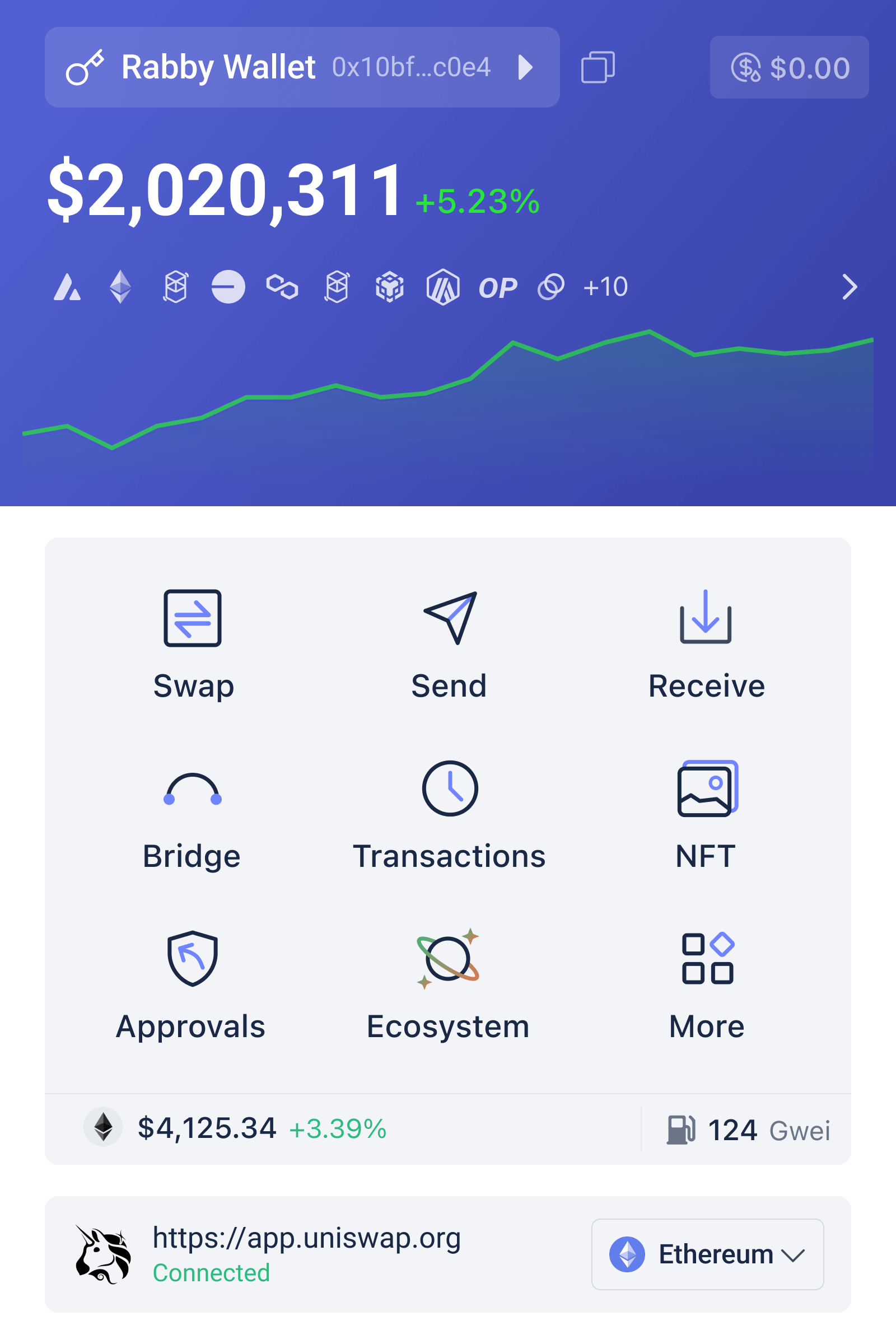
What transaction simulation actually does
A blockchain transaction is often described as a simple instruction: send tokens, swap an asset, deposit into a protocol, or approve a contract. Mechanically, however, a transaction can trigger a chain of contract calls. A swap may interact with a router, a token contract, a liquidity pool, and sometimes additional components. The wallet address may sign only one transaction, while the resulting state changes affect several contracts.
Transaction simulation attempts to execute that proposed transaction in an environment that represents the current blockchain state, without broadcasting the real transaction. The result can reveal expected changes such as tokens leaving the wallet, assets arriving, approvals being created, or a contract call reverting. In practical terms, the user gets a preview of consequences rather than only a cryptic function name and a gas estimate.
This is the first important distinction: simulation is closer to a test run than to an audit. It asks, “What appears likely to happen if this transaction executes against the observed state?” It does not prove that the contract is honest, that the website will remain uncompromised, or that a future transaction will be safe. A simulation can be useful evidence without being a security certificate.
That limitation follows from the nature of decentralized systems. Results can depend on the chain, the block state, the selected RPC provider, token behavior, market prices, and the time between simulation and signing. A rapidly changing liquidity pool may produce different output a few seconds later. A malicious contract may also behave differently under conditions the simulation does not reproduce. The right mental model is “additional evidence,” not “permission to stop thinking.”
Rabby Wallet versus a basic signing flow
A conventional browser wallet often presents the user with the transaction’s destination, gas information, and encoded contract data. For a simple transfer, that may be enough. For a DeFi interaction, it can leave a large interpretive gap. The user may see that an unfamiliar contract is requesting approval, but not immediately understand the amount, duration, or practical effect of that approval.
Rabby Wallet’s approach is more comparative and consequence-oriented. Before signing, a user may be shown an interpreted summary of expected balance changes and the assets involved. Depending on the network and transaction type, the wallet can also surface warnings related to contract risk, simulation failure, or suspicious interaction patterns. The value is not that every warning is correct in every case. The value is that the wallet creates more questions at the moment when a user can still cancel.
| Approach | Strength | Weakness | Best fit |
|---|---|---|---|
| Basic wallet prompt | Fast and familiar; sufficient for straightforward transfers | May expose little meaning behind complex contract calls | Simple, well-understood transactions |
| Transaction simulation | Shows probable state changes before broadcasting | Depends on current state, RPC quality, and contract behavior | Swaps, approvals, lending, staking, and unfamiliar protocols |
| Hardware wallet plus simulation | Adds protection for the signing key while preserving a richer review | More setup and sometimes less convenient for frequent activity | Large balances, treasury operations, and high-value DeFi use |
This comparison exposes a common misconception. Transaction simulation and hardware-wallet security solve different problems. A hardware wallet helps protect the private key from being exposed on a computer. Simulation helps the user evaluate what a valid signature would authorize. One protects the ability to sign; the other improves the decision about what to sign. For meaningful risk reduction, they can complement rather than replace each other.
Why approvals deserve more attention than swaps
Many users focus on the visible output of a swap: how much ETH, USDC, or another asset they expect to receive. The less obvious risk may be the approval that comes first. An ERC-20 approval allows a designated spender to move tokens on behalf of the wallet, subject to the approved amount and the token’s implementation. If the allowance is broad, persistent, or granted to a compromised contract, the danger can continue after the original website interaction ends.
A simulation can help distinguish an immediate transfer from a permission change. That is a material improvement in the user’s mental model. “I am swapping tokens” may be incomplete; the fuller description could be “I am granting a router permission to spend one asset, then calling a swap function.” The second description makes it easier to ask whether the spender is expected, whether the allowance is excessive, and whether the action should be performed from a separate wallet.
Still, a clean-looking simulation does not establish that an approval is economically wise. It may show what the transaction does now without answering how the permission could be used later. This is where operational discipline matters. Users should periodically review and reduce unnecessary allowances, avoid granting unlimited permissions when a smaller amount is practical, and treat every new approval as a separate security decision rather than a routine click.
Installing the Rabby browser extension without weakening the security model
The extension is only as trustworthy as the path used to obtain it and the habits used around it. A user preparing to install should begin from a verified project source or a trusted browser-extension marketplace listing, check the publisher information, and be suspicious of search advertisements or look-alike domains. For readers who need an installation starting point, this rabby extension download resource can be used as a reference, but the same rule applies: verify the destination and never enter a seed phrase into a webpage.
During setup, the seed phrase is the critical boundary. It should be generated or imported only within the wallet’s legitimate interface, never shared with support staff, copied into an online form, or stored in a cloud note. A browser extension can improve transaction visibility, but it cannot recover a phrase that has been stolen. If a wallet is used for substantial funds, separating a daily-use wallet from a long-term or hardware-protected wallet can reduce the consequences of a mistaken signature.
After installation, the most useful test is not simply whether the extension opens. Connect it to a low-value wallet and perform a transaction whose outcome is already understood. Observe whether the displayed assets, recipient, network, fees, and expected changes make sense. This establishes a baseline. If a later DeFi transaction produces a result that is confusing, contradictory, or unexpectedly broad, pause instead of treating the warning as an inconvenience.
Where simulation can fail or mislead
Simulation has several important boundary conditions. First, it is state-dependent. DeFi contracts operate against balances, prices, liquidity, limits, and block-level data that can change between the preview and execution. Second, some transactions depend on external systems, signatures, callbacks, or timing assumptions that are difficult to reproduce perfectly. Third, a contract can be technically simulated without being economically sensible. A successful call may still involve unfavorable slippage, a punitive fee, or an asset with poor liquidity.
There is also a human-factors risk: better interfaces can create overconfidence. When a wallet translates complex contract behavior into friendly labels, users may assume that everything not marked dangerous is safe. That is an unsafe inference. Warning systems usually prioritize detectable patterns; they cannot know every social-engineering campaign, governance dispute, compromised front end, or future change in a protocol’s administration.
Simulation failure requires careful interpretation too. A failed preview may indicate that the transaction would revert, that the RPC provider cannot reproduce the call, that the contract uses unusual logic, or that the transaction parameters are stale. It is a reason to investigate, not automatic proof of fraud. Conversely, a successful preview is evidence that the call can execute under simulated conditions, not evidence that the recipient or protocol deserves trust.
A reusable review framework for DeFi transactions
A practical review can be organized into four questions: identity, effect, permission, and reversibility. Identity asks which chain, contract, recipient, and website are involved. Effect asks what assets should leave and arrive, including fees and slippage. Permission asks whether the transaction creates or expands an allowance, changes an operator, or authorizes future actions. Reversibility asks what can be undone if the protocol, website, or decision turns out to be wrong.
This framework is more reliable than relying on a single green checkmark. For a familiar small swap, a quick review may be reasonable. For a first interaction with a lending market, yield strategy, bridge, or token mint, the same user should slow down and inspect each category. High-value transactions deserve an additional control: compare the displayed contract address with documentation reached independently, and consider using a hardware wallet or a separate wallet with limited funds.
US users should also keep records for practical reasons beyond security. Swaps, liquidity positions, staking, bridging, and token rewards can create complicated transaction histories, and a wallet preview does not determine tax treatment. Saving transaction hashes, screenshots of unusual approvals, and a basic description of the economic purpose can help later reconciliation. This is not a substitute for professional tax advice, but it reduces the chance that an operationally confusing wallet becomes a recordkeeping problem.
What to watch as wallet security evolves
The likely direction of wallet design is toward more expressive transaction intent: not merely “sign these bytes,” but “you are depositing this asset, granting this permission, and receiving this expected result.” If that direction continues, the key question will be whether interpretation remains accurate across new chains, account models, tokens, and contract patterns. Better previews may reduce accidental signing, while novel protocols will continue to test the limits of automated analysis.
The useful signal for users is not a promise that a wallet can detect every threat. It is whether the tool consistently helps them notice meaningful differences between an expected action and an actual one. If simulation becomes faster, clearer, and better integrated with allowance management, it could make cautious behavior easier without removing user responsibility. If interfaces instead hide uncertainty behind confident labels, convenience could increase faster than safety.
FAQ: Rabby Wallet and transaction simulation
Does transaction simulation guarantee that a DeFi transaction is safe?
No. It estimates what the transaction is likely to do under a particular blockchain state and simulation environment. It may reveal unexpected transfers, approvals, or reverts, but it cannot guarantee that a contract is trustworthy, that a website is uncompromised, or that market conditions will remain unchanged.
Is Rabby Wallet safer than every other cryptocurrency wallet?
There is no universal winner. Rabby’s transaction review can be useful for DeFi users who need more context than a basic signing prompt provides. Other wallets may fit better for different custody arrangements, hardware integration, accessibility needs, or supported networks. Security depends on both the wallet’s design and the user’s verification and key-management practices.
What should I do if a simulation shows an unexpected token approval?
Do not sign immediately. Confirm the website, contract address, spender, token, and intended allowance through an independent source. If the approval is unnecessary, unusually broad, or difficult to explain, reject the transaction. If an allowance was already granted, review whether it should be reduced or revoked using a trusted tool and the correct network.
Transaction simulation is therefore best understood as a decision aid. It narrows the gap between technical calldata and human intent, especially when a DeFi action contains hidden permissions or multiple contract calls. Rabby Wallet can make that inspection more practical, but the strongest security model remains layered: trusted installation, protected keys, limited exposure, independent verification, and a willingness to stop when the transaction no longer matches the user’s purpose.
Dự tính lãi suất vay vốn ngân hàng
Lựa chọn thanh toán
(*)Vui lòng tải về file tiến độ thanh toán để xem đầy đủ hơn. Xin cảm ơn!